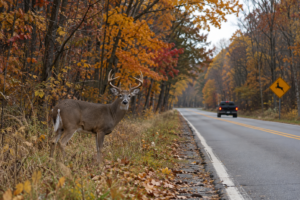
October in Michigan means cooler weather, changing leaves, earlier sunsets—and a much greater chance of seeing deer near the road.
Michigan State Police says deer are most active from October through December, although deer-vehicle crashes can happen throughout the year. More than 58,000 deer-vehicle crashes were reported in Michigan during 2024 alone.
If a deer suddenly appears in front of your vehicle, you may have only seconds to react.
And if a collision happens, one of the biggest questions is:
What should you do next?
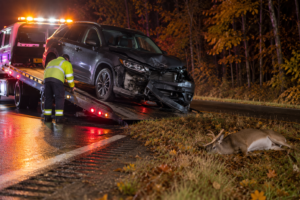
Even when your vehicle looks drivable after hitting a deer, damage underneath the hood, around the radiator, suspension, lights, or tires can make continuing down the road unsafe.
Here is what Michigan drivers should know about deer collisions, vehicle damage, and when it’s time to call US23 Towing.
First: Don’t Swerve to Avoid a Deer
Your natural reaction may be to jerk the steering wheel when a deer runs into the road.
That can create an even more dangerous situation.
Michigan State Police advises drivers not to swerve if a deer collision becomes unavoidable. Instead, brake firmly, stay in your lane, hold the steering wheel with both hands, and bring the vehicle to a controlled stop.
Swerving can send your vehicle into:
- Oncoming traffic
- A ditch
- A guardrail
- A tree
- Another vehicle
It can also cause a rollover.
Your first priority is maintaining as much control of your vehicle as possible.
What Should You Do Immediately After Hitting a Deer?
Once the collision has happened, don’t panic.
If you’re able to safely control the vehicle, move as far out of active traffic as possible and turn on your hazard lights.
Then assess the situation.
Check yourself and your passengers for injuries. If anyone is injured or the crash creates an immediate roadway hazard, contact emergency services.
Avoid approaching an injured deer.
A frightened or injured animal can behave unpredictably.
Once you’re somewhere safe, inspect the vehicle from a safe position if conditions allow.
The most important question isn’t whether the vehicle still starts.
It’s whether the vehicle is safe to drive.
1. Check for Coolant Leaks or Overheating
The front of the vehicle commonly takes the impact during a deer collision.
Behind that bumper are several important components, including parts of your cooling system.
A collision may damage:
- Radiator
- Cooling fans
- Hoses
- Coolant reservoir
- Front supports
Look underneath the vehicle for leaking fluid.
Also watch your temperature gauge.
If coolant is pouring from the vehicle or the engine temperature begins climbing, shut the engine off.
Do not try to drive another 10 or 20 miles because the car “still runs.”
An overheated engine can turn collision damage into serious engine damage.
Call US23 Towing instead.
2. Check Your Headlights and Turn Signals
October means shorter days.
Many Michigan drivers are commuting before sunrise or returning home after dark.
If a deer damages your headlights, turn signals, or other lighting, the vehicle may not be safe to continue driving.
A headlight assembly can also appear intact while being loose or pointed in the wrong direction after an impact.
Don’t underestimate lighting damage simply because the engine still runs.
3. Look at Your Tires and Wheels
A deer collision doesn’t always happen perfectly head-on.
If the animal hits one corner of the vehicle, the impact may affect a wheel, tire, steering component, or suspension.
Watch for:
- Flat tires
- Bent wheels
- Tire rubbing
- Vehicle leaning
- Steering wheel sitting crooked
- Pulling to one side
- Unusual vibration
If a tire or suspension component is damaged, continuing to drive can make the vehicle harder to control.
That’s a good reason to search for towing near me instead of risking the drive home.
4. Pay Attention to Your Steering
Maybe the exterior damage doesn’t look terrible.
But how does the vehicle feel?
If the steering suddenly feels different after hitting a deer, something underneath may have been damaged.
You might notice the vehicle:
- Pulling left or right
- Wandering
- Vibrating
- Making clunking noises
- Becoming difficult to steer
Those aren’t problems to “see if they go away.”
Get the vehicle inspected.
5. Don’t Ignore Dashboard Warning Lights
Modern vehicles contain sensors throughout the car.
A collision may trigger warning lights related to:
- Airbags
- Engine temperature
- Braking systems
- Traction control
- Tire pressure
- Check engine system
One warning light doesn’t automatically tell you exactly what was damaged.
It tells you the vehicle needs attention.
If multiple warning lights appear immediately following an accident, towing the vehicle to a repair facility may be the safer choice.
Can You Drive Your Car After Hitting a Deer?
Sometimes.
A minor collision may leave the vehicle mechanically safe to drive.
Other times, what appears to be cosmetic damage hides a bigger problem.
Do not continue driving if you notice leaking fluids, overheating, tire or wheel damage, steering problems, major lighting damage, loose body panels, smoke, unusual noises, or reduced braking ability.
When you’re unsure, don’t gamble with it.
Calling US23 Towing can prevent additional vehicle damage and keep an unsafe vehicle off the road.
What If the Vehicle Is Blocking the Road?
Make safety your priority.
Turn on your hazards and contact emergency services when the crash is creating a dangerous obstruction or someone is injured.
Don’t stand in an active traffic lane trying to inspect damage.
October evenings get dark quickly, and drivers approaching the scene may not immediately recognize that your vehicle is disabled.
Once the scene is secure, a towing company can remove the damaged vehicle.
Why October Is a Good Time to Be Extra Alert
Michigan’s deer activity increases during fall.
Michigan State Police reports that deer are particularly active around dawn and dusk and advises drivers to scan roadsides, pay attention around wooded areas and field edges, and remember that seeing one deer may mean others are nearby.
Slow down when visibility is limited.
Use extra caution on two-lane roads and areas marked with deer-crossing signs.
And keep your phone charged.
You never expect to need a tow until you do.
Frequently Asked Questions
Should I call a tow truck after hitting a deer?
If your vehicle has fluid leaks, overheating, steering problems, tire or wheel damage, major front-end damage, reduced braking, or anything else that makes you question its safety, towing is the better option.
Can hitting a deer damage the radiator?
Yes. Front-end impacts can damage the radiator, cooling fans, hoses, and related components. Watch for coolant leaks and rising engine temperature.
My car still drives after hitting a deer. Does that mean it’s safe?
Not necessarily. Some mechanical or structural damage isn’t immediately obvious. If anything feels, sounds, or smells different after the collision, have the vehicle inspected.
What should I do if I see a deer in the road?
Slow down and stay alert. If a collision becomes unavoidable, Michigan State Police advises drivers to brake firmly, stay in their lane, and avoid swerving.
Save US23 Towing Before You Need It
Nobody plans on hitting a deer.
That’s exactly why it helps to already know who you’re calling.
Whether you’ve been involved in a deer collision, your vehicle is damaged, or you simply don’t feel safe driving it after an accident, US23 Towing can help get your vehicle off the road and where it needs to go.
Save the number now: 810-655-5959.
When something unexpected happens on a Michigan road, don’t risk causing more damage by forcing your vehicle home.
Call US23 Towing at 810-655-5959 for dependable towing when you need it.