Your brakes are the most important safety system on your vehicle. You can drive with a weak battery. You can survive a failing A/C. But failing brakes? That’s a disaster waiting to happen.
The truth is simple:
Brakes rarely fail overnight. They warn you first.
The problem is that most drivers ignore those warnings—until the situation becomes dangerous enough to require towing, repairs, or even accident recovery.
This guide breaks down the top 5 signs you need brake repair, what those symptoms really mean, why you shouldn’t wait, and how a free brake inspection can save you from a much bigger problem down the road.
If you’ve recently searched brake repair near me or noticed anything unusual while slowing down, this article is for you.
1. Your Brakes Are Squeaking, Screeching, or Making High-Pitched Noises
This is the most common early warning sign—and the most commonly ignored.
What the Noise Means
Modern brake pads are designed with a metal wear indicator.
When the pad material gets thin, the indicator scrapes against the rotor and creates that high-pitched squeal.
That squeal is NOT random.
It’s your brakes saying:
“Replace me before I damage the rotors.”
Ignoring this noise leads to:
- Metal-on-metal grinding
- Deep rotor scoring
- Expensive rotor replacement
- Longer stopping distances
- Dangerous brake fade
When the Noise Is Urgent
If the sound turns from squeaking to grinding, you’ve already waited too long.
Grinding means the pads are completely gone—and the steel backing plate is cutting into your rotor like a knife.
At that point, you’re not just damaging your vehicle.
You’re putting yourself and everyone around you at risk.
Why You Should Act Fast
Brake pad replacement is affordable.
Rotor replacement is not.
A free brake inspection can confirm how much pad life you have left—and whether your rotors can be resurfaced or need replacing.
2. Your Brake Pedal Feels Soft, Spongy, or Goes Further Down Than Usual
A soft pedal is one of the most serious brake problems you can experience.
What “Spongy Brakes” Really Mean
This can indicate:
- Air in the brake lines
- Low brake fluid
- A failing master cylinder
- Leaking brake fluid
- Compromised brake hoses
Any one of these issues can cause brake failure.
A brake pedal should feel firm and responsive.
If it sinks, feels mushy, or takes more effort to stop, you’re not getting full braking pressure—and your stopping power is compromised.
Why This Is Dangerous
Spongy brakes mean your hydraulic system isn’t working correctly.
And brakes rely on perfect hydraulic pressure to function.
If pressure drops further, the pedal can go all the way to the floor.
At that point?
You have no brakes.
Immediate Action Required
If your pedal feels soft, do NOT wait.
Searching brake repair near me won’t help if you’re already on the highway with fading brakes.
Pull over safely and get the braking system inspected ASAP.
A free brake inspection will reveal where the pressure loss is happening and prevent a complete failure.
3. Your Vehicle Vibrates, Shakes, or Pulses When You Brake
When you press the brake pedal, the car should slow smoothly and consistently.
If the steering wheel shakes, the pedal pulses, or the whole car vibrates, the cause is almost always the same:
Warped Brake Rotors
Rotors warp due to:
- Excessive heat
- Aggressive braking
- Worn brake pads
- Towing or hauling heavy loads
- Cheap or low-quality rotors
- Extended downhill braking
A warped rotor doesn’t clamp evenly.
Instead, the brake pads hit “high spots” each rotation, creating vibration.
Why This Matters
Vibration isn’t just annoying—it’s dangerous.
Warped rotors reduce stopping efficiency and can cause:
- Longer braking distances
- Brake fade
- Unpredictable braking
- Steering instability
If your steering wheel shakes while braking, you’re already losing control—even if it feels minor.
The Fix
Sometimes rotors can be resurfaced.
Sometimes they must be replaced.
A free brake inspection will determine which option is safe.
4. Your Vehicle Pulls Left or Right When Braking
If your car pulls to one side when you brake, this isn’t just a brake problem—it’s a safety emergency.
Pulling often indicates:
A. A Stuck Brake Caliper
One caliper clamps harder than the other, jerking your vehicle in that direction.
B. Uneven Pad Wear
Pads wear down at different rates, causing imbalance.
C. Collapsed or Damaged Brake Hose
Hoses restrict or release pressure unevenly.
D. Contaminated Brake Fluid
Moisture or debris disrupts pressure distribution.
E. Rotor Issues
Uneven rotor surfaces can cause directional pulling.
Why This Is Dangerous
Imagine slamming the brakes in an emergency and your vehicle veers sharply into another lane—or into oncoming traffic.
A car that can’t brake straight is unsafe at ANY speed.
Immediate Warning
If your vehicle pulls when braking:
- Do NOT ignore it
- Do NOT assume it’s “just alignment”
- Do NOT wait to see if it gets better
Often, drivers blame alignment when the real issue is failing brake components.
A free brake inspection will identify the root cause and prevent catastrophic failure.
5. Burning Smell, Smoke, or Brake Warning Lights
The most alarming symptoms are the ones you can see or smell.
A. Burning Smell
A sharp, chemical odor during braking means your brakes are overheating.
Possible causes:
- Stuck caliper
- Constant pad contact
- Aggressive braking
- Fluid leak burning off
Overheated brakes fail suddenly and without warning.
B. Smoke From Wheels
This is an emergency.
Stop driving immediately.
Smoke indicates:
- A seized caliper
- Brake fire risk
- Severe friction
- Melted brake components
C. Brake Warning Light
This is not optional.
A brake light means:
- Low brake fluid
- ABS malfunction
- Brake system failure
- Sensor detection of hydraulic issues
Why These Signs Must Never Be Ignored
Heat destroys:
- Pads
- Rotors
- Calipers
- Brake fluid integrity
- Wheel bearings
If you smell burning or see smoke, pull over at once and search brake repair near me, but do NOT continue driving long distances.
A free brake inspection determines how deep the damage goes and what must be fixed immediately.
BONUS: 6. Your Brake Pedal Is Hard to Press
Sometimes brakes fail the opposite way:
The pedal becomes too stiff.
This usually points to:
- A failing brake booster
- Vacuum leak
- Power assist failure
Hard pedals drastically increase stopping distances.
This is especially dangerous in:
- Highway traffic
- Wet or icy conditions
- Emergency braking situations
A car with a hard brake pedal is one bad stop away from a serious collision.
How a Free Brake Inspection Protects You
A free brake inspection is the smartest thing any driver can do—especially when early signs of brake wear begin to show.
During an inspection, a technician will:
✔ Measure brake pad thickness
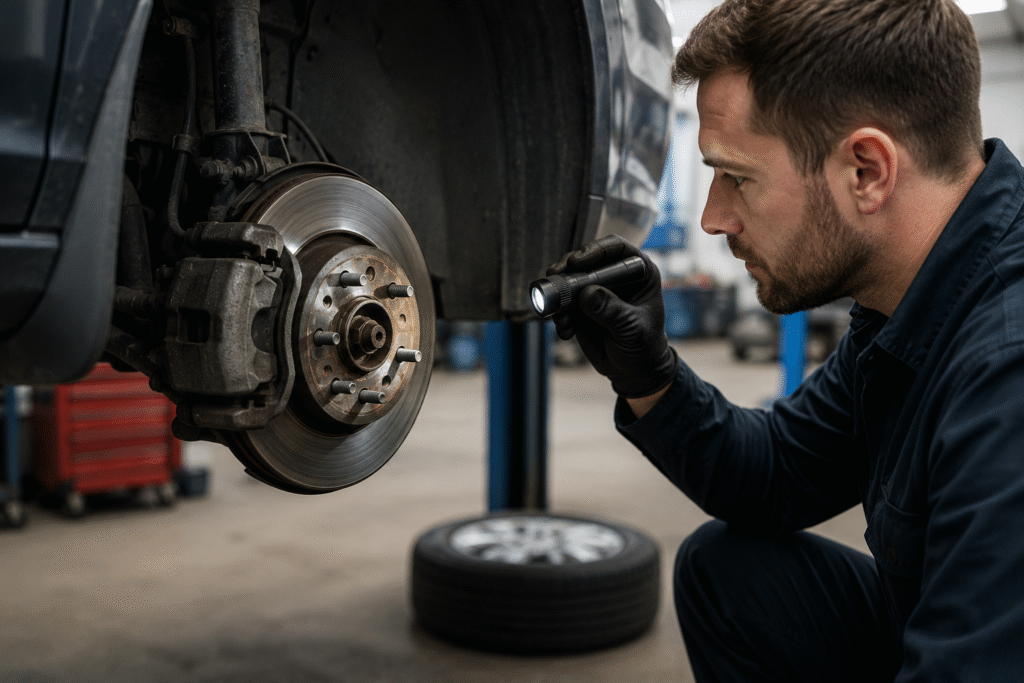
✔ Inspect rotors for warping or scoring
✔ Check calipers for proper movement
✔ Inspect brake lines and hoses
✔ Test brake fluid quality
✔ Look for leaks
✔ Evaluate brake booster and master cylinder
✔ Check for uneven wear
✔ Test parking brake performance
✔ Diagnose sounds, vibrations, or pedal issues
This gives you a complete picture of your brake health—and helps you fix problems BEFORE they become dangerous.
Why Waiting Is a Risk You Can’t Afford
Most brake failures happen gradually.
Drivers notice:
- A little squeak
- A slight vibration
- A mild pull
- A bit of softness in the pedal
And then they ignore it.
Weeks or months later, that “little” issue becomes:
- A $700 rotor + caliper replacement
- A complete brake system failure
- A blown brake line
- A tow truck call
- A near accident—or worse
Brake repairs are ALWAYS cheaper before the real damage happens.
If you’re thinking:
“I should get my brakes checked soon…”
That means you should get them checked TODAY.
When You Search “Brake Repair Near Me,” Here’s What You Should Look For
Not all brake shops are equal.
Choose a shop that offers:
✔ Complimentary brake inspections
✔ Honest, upfront pricing
✔ Clear explanations
✔ High-quality pads and rotors
✔ Fast turnaround
✔ Brake specialists
✔ No upselling pressure
If a shop won’t show you your worn parts, won’t explain the issue, or tries to replace everything “just because,” turn around and walk away.
You need a shop that protects your safety—not their profits.
How Brake Problems Lead to Emergency Towing
If you ignore brake issues long enough, the outcome is predictable:
- The pedal drops to the floor.
- The vehicle won’t stop properly.
- You panic.
- You brake harder.
- Heat skyrockets.
- Components fail.
- You need a tow—fast.
Many breakdowns labeled “engine problems” or “transmission issues” start with brake system failures.
Routine brake care prevents towing calls, accidents, and massive repair bills.
Final Checklist: Do Your Brakes Need Repair?
If ANY of these sound familiar, it’s time for a free brake inspection:
✔ Squeaking, screeching, or grinding
✔ Soft or spongy pedal
✔ Pedal sinks to the floor
✔ Vehicle vibrates when braking
✔ Car pulls left or right
✔ Burning smell
✔ Smoke from wheels
✔ Brake warning light
✔ Hard brake pedal
✔ Long stopping distance
Brake issues don’t fix themselves.
They get louder… stronger… hotter… and eventually dangerous.
Protect Yourself Before It’s Too Late — Get Your Brakes Checked Today
Your safety depends on your brakes.
Your family’s safety depends on your brakes.
Everyone on the road around you depends on your brakes.
If you’ve noticed any of the warning signs listed above—or if you simply want peace of mind—get a free brake inspection ASAP.
Fast. Honest. Professional.
No guesswork. No pressure.
Just real answers about your brake health.
Need Brake Help? Schedule a Free Brake Inspection Today
If you’ve been searching for brake repair near me, you’ve found a shop that puts safety first.
📞 Call 810-655-3600
Book your free brake inspection and keep your vehicle safe on the road.
Your brakes won’t warn you twice.
Fix the problem today—before it becomes dangerous tomorrow.