October is one of the best months to ask yourself one question:
Is my car actually ready for another Michigan winter?
It’s easy to wait.
The weather isn’t terrible yet. There may not be snow on the ground. Your car started this morning. The tires look okay.
Then the first real cold snap hits.
Suddenly the battery that seemed fine won’t start the engine. Your tire-pressure light comes on. The heater isn’t working properly. Or that brake noise you’ve been ignoring becomes much more concerning on a wet or icy road.
There’s a reason October is recognized as Fall Car Care Month. AAA recommends using the season to address preventive maintenance before colder conditions arrive.
For Michigan drivers, October is the perfect time.
Here are eight things worth checking now before winter has a chance to expose a problem for you.
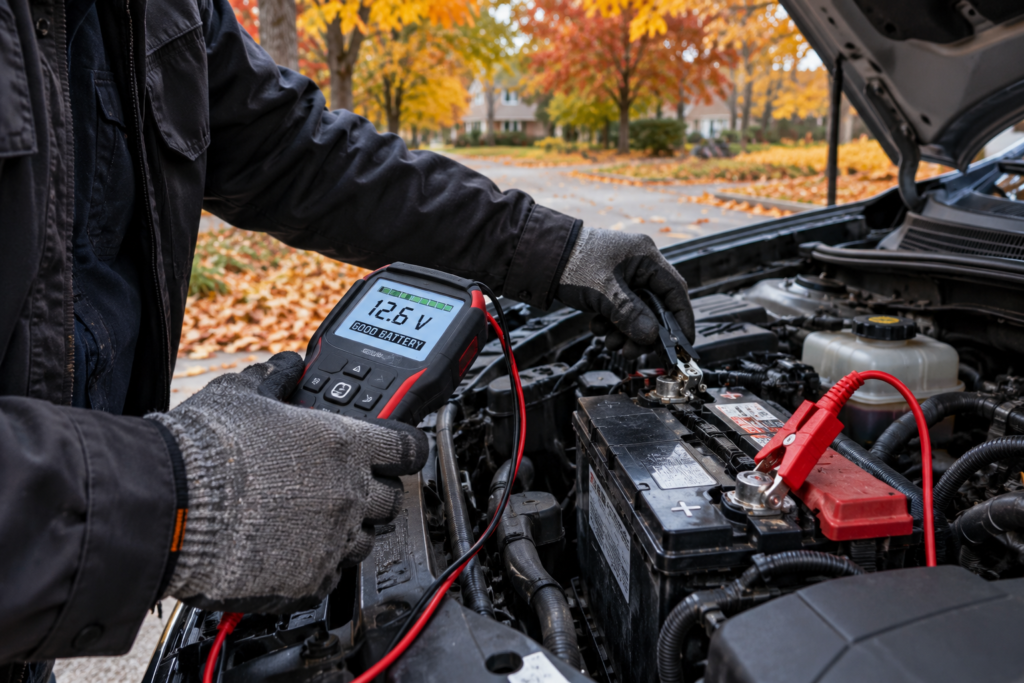
1. Test Your Battery Before the First Really Cold Morning
A vehicle that starts perfectly in October can still struggle when temperatures fall.
Cold temperatures reduce a battery’s available power while the engine requires more energy to start.
That means an older or weakened battery may work fine one week and leave you hearing nothing but clicks the next.
Pay attention to warning signs such as:
- Slow cranking
- Clicking during startup
- Dim headlights
- Battery warning light
- Electrical accessories behaving strangely
- Repeated jump-starts
Don’t wait until the vehicle doesn’t start.
Get the battery and charging system tested beforehand.
Alt Text: Car battery test during fall car maintenance before Michigan winter.
2. Check Your Tire Pressure
Ever notice your tire-pressure warning light suddenly appear after the first cold night?
There’s a reason.
As outside temperatures decrease, tire pressure generally decreases as well. AAA notes that tire pressure changes by roughly 1 PSI for every 10-degree Fahrenheit temperature change.
That makes October temperature swings an important time to pay attention to your tires.
Don’t inflate tires according to the maximum pressure printed on the tire itself.
Use your vehicle manufacturer’s recommended pressure, normally found on the driver’s-side door-jamb label or in your owner’s manual.
Proper inflation helps your tires perform the way they were designed to.
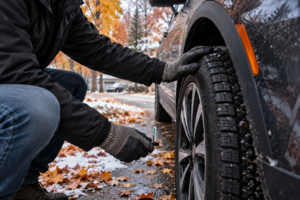
3. Inspect Your Tire Tread
Pressure isn’t the only thing that matters.
Your tires need enough tread to handle water, slush, and snow.
Look for:
- Low tread
- Uneven wear
- Cracking
- Bulges
- Damage
- Excessive age
If the inside edge of one tire is nearly bald while the outside looks fine, you may also have an alignment or suspension problem.
Don’t wait until the first snowstorm to discover your tires aren’t ready.
4. Have Your Brakes Inspected
Good tires help you maintain traction.
Good brakes help you stop.
You need both.
If your brakes have been squeaking throughout summer, October isn’t the month to continue ignoring them.
Pay attention to:
- Squealing
- Grinding
- Longer stopping distances
- Soft brake pedal
- Vehicle pulling during braking
- Steering-wheel vibration
Worn brake pads may eventually begin damaging the rotors.
More importantly, you don’t want your first indication of poor braking performance to happen during freezing rain or snow.
AAA recommends regular brake inspections and specifically includes brake checks among important preventive maintenance services.
Have the problem inspected before winter.
5. Check Your Coolant
A lot of drivers think coolant only matters during summer because it keeps the engine from overheating.
That’s only half the job.
Your cooling system also needs the proper coolant mixture to protect the engine in freezing temperatures.
Check:
- Coolant level
- Hoses
- Radiator
- Reservoir
- Visible leaks
If you’re repeatedly adding coolant, don’t simply keep topping it off.
Find the leak.
A small cooling-system problem in October can become a breakdown later.
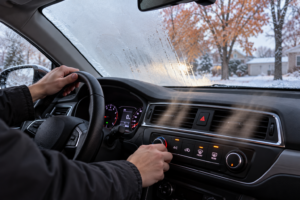
6. Make Sure Your Heater and Defroster Work
You probably haven’t thought much about your heater since spring.
Turn it on now.
Make sure warm air actually comes through the vents.
Then test the windshield defroster.
A functioning defroster isn’t just about comfort. You need to be able to clear condensation, frost, and ice from your windshield so you can see.
If airflow is weak, temperatures aren’t changing correctly, or the windshield isn’t clearing properly, get it checked before you actually need it.
7. Replace Bad Wiper Blades
Michigan winter visibility can get ugly fast.
Rain.
Wet leaves.
Slush.
Snow.
Road spray.
Salt.
Old wipers make all of it worse.
If your blades streak, skip, chatter, or leave sections of the windshield untouched, replace them.
Then check your washer fluid.
October is a much better time to discover bad wipers than the middle of a snowstorm.
8. Pay Attention to Warning Lights and Strange Noises
This one may save you the most money.
Don’t enter winter with an existing problem.
That includes the:
“It’s been making that noise for a while.”
Or:
“That light comes on sometimes.”
Or:
“It only shakes at highway speed.”
Those aren’t things to ignore.
A small problem doesn’t automatically become catastrophic because winter arrives, but colder conditions can place additional demands on batteries, tires, fluids, and other vehicle systems.
If something doesn’t feel right, October is the time to figure out why.
Why October Maintenance Can Prevent a Winter Tow
Many roadside breakdowns start with something that could have been identified earlier.
AAA reported that, of its more than 27 million U.S. emergency roadside service calls in 2024, roughly 13 million required towing and approximately 7 million involved battery problems.
That’s a useful reminder.
Your vehicle doesn’t care whether it’s convenient when something fails.
A weak battery can die before work.
A damaged tire can go flat on the highway.
An ignored coolant leak can turn into an overheating problem.
A worn belt can break miles away from home.
Preventive maintenance doesn’t guarantee you’ll never have a breakdown.
It reduces the chances of an avoidable one.
What Should You Keep in Your Car for Winter?
Once your vehicle itself is ready, prepare for the possibility that something still goes wrong.
Consider keeping basic emergency supplies in the vehicle, including a flashlight, phone charger, warm blanket, basic first-aid supplies, water, and other essentials appropriate for winter travel.
And add one more thing:
US23 Towing’s phone number.
You don’t want to be searching for a towing company for the first time while you’re sitting on the shoulder in freezing weather.
Frequently Asked Questions
When should I prepare my car for winter in Michigan?
October is an excellent time because temperatures are beginning to fall, but you’re getting ahead of the harshest winter conditions.
Why does my tire-pressure light come on when it gets cold?
Air pressure inside the tire decreases as temperatures fall. Check all four tires against your vehicle manufacturer’s recommended PSI rather than simply resetting the warning.
How do I know if my car battery is getting weak?
Slow cranking, clicking, dim lights, electrical issues, and repeated jump-starts are common warning signs. A battery test can give you a better idea of its condition.
Should I replace my brakes before winter?
Not automatically. Have them inspected. If the pads, rotors, or other brake components are worn or damaged, address the problem before winter driving conditions make dependable stopping even more important.
What happens if my car breaks down once winter arrives?
Move somewhere safe when possible, turn on your hazards, and contact roadside assistance or a towing provider. If the vehicle isn’t safe to drive, don’t force it.
Don’t Wait for the First Snowstorm
Every year, drivers wait until winter arrives to think about winter maintenance.
Don’t be one of them.
October gives you time to check the battery, tires, brakes, coolant, heater, defroster, wipers, and other basic systems before Michigan weather becomes less forgiving.
Fixing a problem in your driveway or at the repair shop is a lot easier than discovering it on the side of the road.
And sometimes, breakdowns happen no matter how well you prepare.
That’s where US23 Towing comes in.
If your vehicle won’t start, breaks down, becomes unsafe to drive, or leaves you stranded, save this number:
US23 Towing: 810-655-5959
Prepare your vehicle now.
And when the unexpected happens, know who to call.