
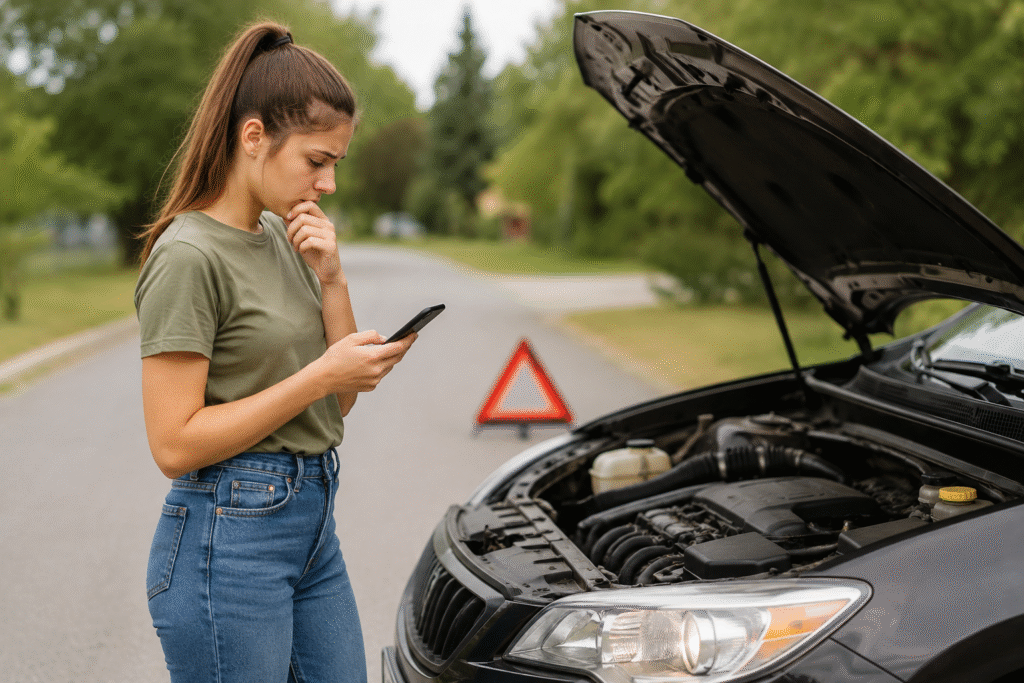
Stay Calm First — Panic Makes Everything Worse
Breaking down for the first time can feel overwhelming, especially for newer drivers. One minute you’re driving normally, and the next your dashboard lights up, your vehicle loses power, or smoke starts coming from under the hood. Most new drivers panic in that moment, and honestly, that’s understandable.
But the first thing you need to know is this:
A breakdown does not automatically mean danger.
The way you respond is what determines whether the situation stays safe or becomes risky.
For new drivers in Michigan, weather conditions, busy highways, potholes, and winter driving make vehicle breakdowns more common than people realize. That’s why understanding towing safety and roadside procedures matters before an emergency happens.
This guide walks you through the exact safe steps every new driver should take during a breakdown before roadside help arrives.
Step 1: Stay Calm and Focus on Controlling the Vehicle
If your vehicle suddenly starts acting up:
- Don’t slam on the brakes
- Don’t jerk the wheel
- Don’t panic
- Keep both hands on the steering wheel
Many newer drivers make dangerous decisions because they panic. Sudden steering or braking can make the vehicle harder to control.
Instead:
- Slowly reduce speed
- Check your mirrors
- Signal if possible
- Begin moving toward a safe area
If your engine loses power, remember that steering and braking may feel heavier. Stay controlled and guide the vehicle carefully.
Step 2: Move to a Safe Location
Your first goal is always safety.
If the vehicle still rolls, try moving to:
- A wide shoulder
- A parking lot
- A side street
- A rest stop
- A flat grassy area away from traffic
Avoid stopping:
- In the middle of traffic
- Around blind curves
- On bridges
- In narrow shoulders
Michigan highways can be extremely dangerous during breakdowns because drivers often travel at high speeds even in poor weather.
The farther away from traffic you can safely get, the better.
Step 3: Turn On Your Hazard Lights Immediately
Your hazard lights tell other drivers:
“There’s a problem here — give me space.”
This is one of the most important towing safety steps you can take.
Hazard lights are especially important during:
- Rain
- Snow
- Night driving
- Fog
- Heavy traffic
- Highway breakdowns
If visibility is poor, your hazards could prevent another vehicle from crashing into you.
Step 4: Stay Inside the Vehicle if It’s Safe
Most new drivers think they should immediately get out and inspect the car.
That’s often the wrong move.
If you are on the side of the road and your vehicle is in a relatively safe location:
Stay inside.
Traffic is the biggest danger during most roadside breakdowns.
Vehicles passing at 70 mph create far more risk than the breakdown itself.
You should only exit the vehicle if:
- Smoke or fire is present
- You smell gasoline
- The vehicle is in immediate danger
- Law enforcement instructs you to exit
If you must get out, use the passenger-side door away from traffic.
Step 5: Call for Professional Roadside Help
This is why every driver should save a reliable towing company’s number before an emergency happens.
When you call for roadside help, provide:
- Your exact location
- Nearby exits or landmarks
- Vehicle make and model
- Description of the issue
- Whether the car rolls or not
- Whether you are in a safe location
Clear communication helps the tow operator arrive faster and better prepared.
Roadside help is not just for towing. A professional company may also assist with:
- Dead batteries
- Flat tires
- Lockouts
- Fuel delivery
- Winch-outs
- Jump starts
Step 6: Make Yourself Visible
Visibility matters during every breakdown.
Besides hazard lights, you can:
- Turn on interior dome lights at night
- Raise the hood if safe
- Use reflective triangles
- Wear reflective clothing if available
A visible vehicle is safer for both you and passing drivers.
This is especially important during Michigan winters where visibility can disappear quickly.
Step 7: Keep Emergency Supplies in Your Vehicle
New drivers should always keep a small emergency kit inside the vehicle.
Recommended items include:
- Flashlight
- Phone charger
- Blanket
- Water bottles
- Jumper cables
- Tire pressure gauge
- Reflective triangle
- Ice scraper
- Gloves
- First aid kit
These items can make a stressful situation much easier while waiting for roadside help.
Step 8: Avoid Accepting Help From Strangers
Most people mean well, but safety comes first.
If someone stops to help:
- Keep your doors locked
- Crack the window slightly if needed
- Politely explain help is already coming
Professional roadside help is always safer than relying on someone you don’t know.
Step 9: Learn Basic Vehicle Warning Signs Before They Become Emergencies
A breakdown usually gives warning signs first.
Teach new drivers to pay attention to:
- Dashboard warning lights
- Grinding noises
- Squealing brakes
- Overheating
- Burning smells
- Hard steering
- Battery warning lights
Catching issues early prevents roadside emergencies later.
Final Thoughts
Vehicle breakdowns happen to everyone eventually.
The difference between a stressful situation and a dangerous one often comes down to preparation and calm decision-making.
For new drivers in Michigan, understanding towing safety and roadside help procedures builds confidence and keeps everyone safer.
Remember:
- Stay calm
- Move to safety
- Turn on hazards
- Stay inside when possible
- Call professional roadside help
A breakdown doesn’t have to become a disaster.
With the right steps, it becomes something you handle safely, confidently, and smartly.