
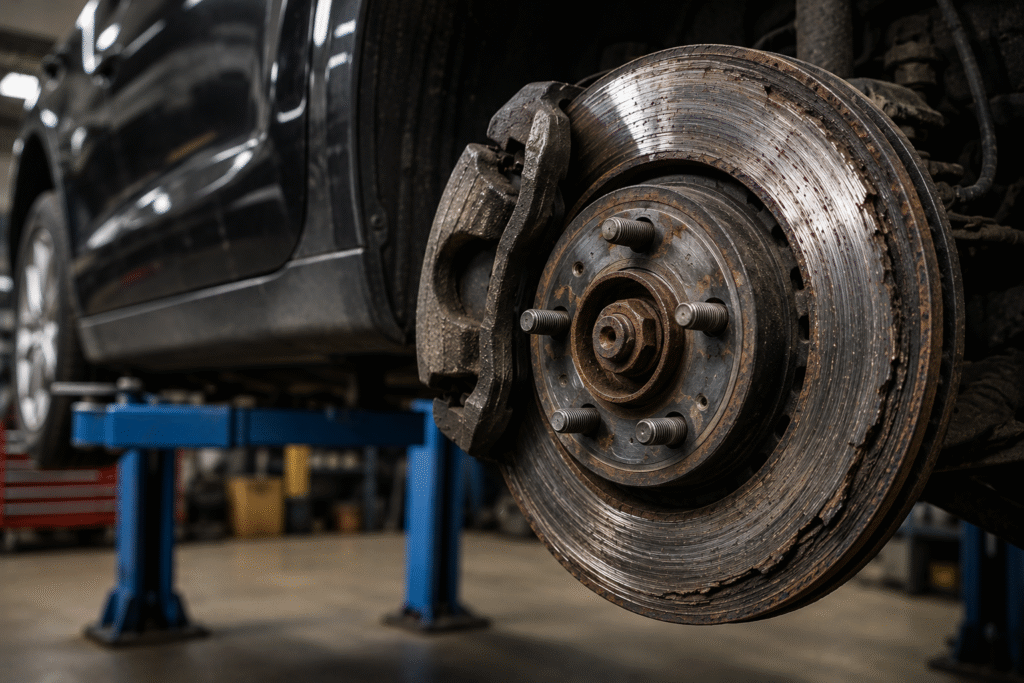
Worn Brake Pads Don’t Just Affect Braking — They Damage Everything Around Them
Most drivers know brake pads wear out.
What many drivers don’t realize is what happens AFTER the pads wear down.
The real problem isn’t the brake pads themselves.
It’s the expensive damage that starts happening around them when drivers wait too long to replace them.
Ignoring worn brake pads creates:
- Brake rotor replacement costs
- Caliper damage
- ABS system issues
- Dangerous stopping distances
- Towing bills
- Accident risks
And unfortunately, most drivers don’t notice the seriousness until the repairs become expensive.
This guide explains the hidden brake damage no one talks about — and why delaying brake service becomes one of the most expensive mistakes vehicle owners make.
1. Brake Pads Are Designed to Wear — But Not Forever
Brake pads are friction material.
Every time you press the brake pedal, the pads clamp the rotors and slowly wear down.
That’s normal.
What’s NOT normal is continuing to drive after the pads are completely worn.
Brake pads are meant to protect:
- Rotors
- Calipers
- Brake hardware
- ABS systems
- Overall brake safety
Once the friction material disappears, metal components begin grinding directly against the rotor.
That’s where the real damage starts.
2. The First Hidden Cost: Brake Rotor Replacement
Brake rotor replacement is one of the biggest consequences of ignored brake pads.
Rotors are smooth metal discs your pads press against.
When pads wear out completely:
- Metal backing plates scrape the rotor
- Deep grooves form
- Heat increases rapidly
- Rotors warp or crack
Instead of a simple brake pad replacement, drivers now need:
- New pads
- Brake rotor replacement
- Additional labor costs
Rotors are far more expensive than pads.
Delaying brake service turns a smaller repair into a much bigger bill.
3. Brake Heat Damages Calipers and Hardware
Brake systems generate serious heat.
Worn brake pads increase that heat dramatically.
Excessive heat damages:
- Brake calipers
- Pistons
- Brake seals
- Brake fluid
- Slide pins
- Hardware clips
Overheated calipers can stick or seize.
That creates:
- Uneven braking
- Vehicle pulling
- Premature rotor wear
- Dangerous stopping conditions
Brake damage spreads quickly when ignored.
4. ABS System Problems Become More Likely
Your ABS system relies on properly functioning brakes.
Worn pads create:
- Excessive vibration
- Heat buildup
- Uneven wheel speed signals
- Sensor contamination
Eventually ABS warning lights may appear.
ABS repairs are expensive.
Ignoring simple brake wear symptoms often leads to complex electronic brake repairs later.
5. Brake Safety Drops Fast Once Pads Wear Thin
Brake pads lose stopping efficiency as they wear.
Drivers notice:
- Longer stopping distances
- Soft brake feel
- Grinding noises
- Poor emergency stopping
- Brake fade
During emergencies, those extra few feet matter.
Brake safety isn’t optional.
A vehicle that cannot stop properly becomes dangerous for:
- You
- Your passengers
- Other drivers
- Pedestrians
6. Ignoring Brake Problems Leads to Emergency Towing
Many towing calls begin with ignored brake problems.
Eventually drivers experience:
- Locked brakes
- Smoking brakes
- Complete brake failure
- Unsafe driving conditions
- Vehicles unable to move safely
At that point, towing becomes necessary.
The repair costs are also much higher than if the pads had been replaced earlier.
7. Common Warning Signs Drivers Ignore
Drivers often wait too long because the warning signs start small.
The most common brake wear symptoms include:
- Squeaking
- Grinding
- Vibration when braking
- Burning smells
- Pulling left or right
- Soft brake pedal
- Brake warning lights
None of these signs should be ignored.
Brake systems almost always warn drivers before complete failure happens.
8. Why Michigan Roads Wear Brakes Faster
Michigan conditions are rough on braking systems.
Factors include:
- Salt corrosion
- Heavy winter braking
- Stop-and-go traffic
- Potholes
- Wet road conditions
- Frequent temperature swings
Brake service Michigan drivers need is often more frequent than drivers in warmer climates.
Winter road conditions create more wear, more heat, and more stress on brake components.
9. Why Preventive Brake Service Saves Money
Replacing brake pads early prevents:
- Rotor replacement
- Caliper damage
- ABS repairs
- Towing bills
- Accident risk
Routine inspections cost far less than major brake repairs.
Most brake problems become expensive only because drivers wait too long.
Final Thoughts
Brake pads are one of the most important safety components on your vehicle.
Ignoring worn brake pads doesn’t just reduce stopping power.
It creates hidden brake damage that spreads through the entire braking system:
- Rotors
- Calipers
- ABS sensors
- Brake fluid
- Hardware
And eventually, those small warning signs become expensive repairs, dangerous driving conditions, or emergency towing situations.
The smartest thing any driver can do is simple:
Don’t wait.
Fix brake problems early.
Routine brake inspections and brake pad replacement protect:
- Your wallet
- Your safety
- Your vehicle
- Everyone else on the road
Because when it comes to brake safety, waiting always costs more in the end.