
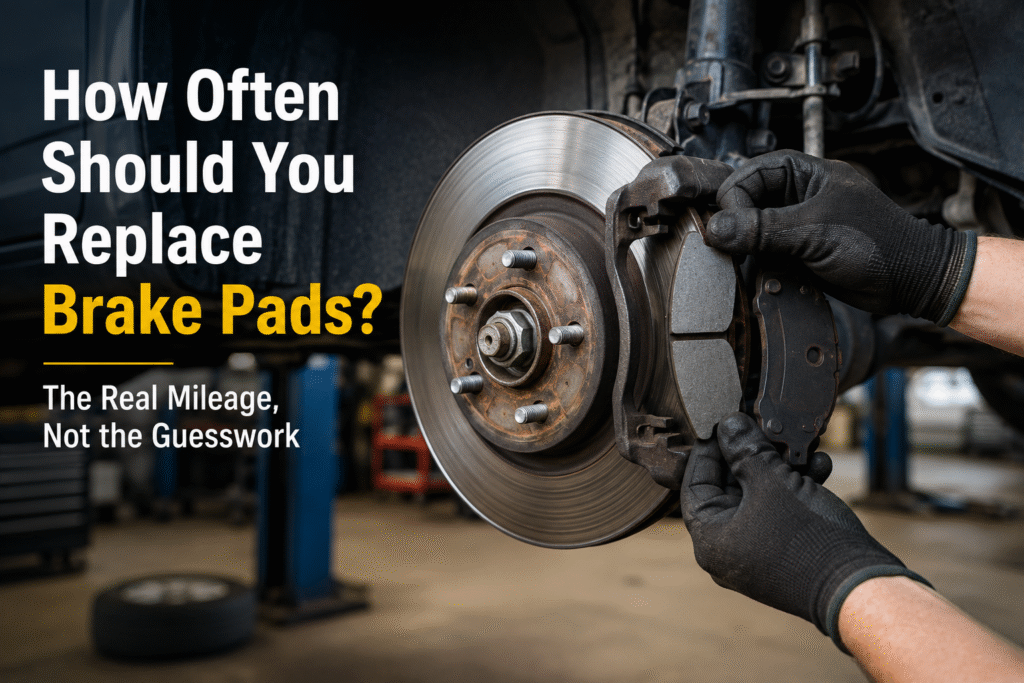
One of the most common questions drivers ask is:
“How long do brake pads actually last?”
Here’s the real answer most shops don’t tell you:
It depends — heavily — on how YOU drive, where you drive, what you drive, and what you haul.
Most people think brake pads last 30,000–50,000 miles. Some do.
But here in Michigan? With our roads, winters, salt, potholes, traffic, and towing loads?
Brake pads often wear out much sooner.
This guide breaks down everything you need to know about brake pad life, the REAL mileage ranges, the exact brake wear symptoms to watch for, and why replacing brake pads early isn’t just maintenance —
It’s protection.
Let’s make this simple and honest, the way men appreciate straight information.
1. What Brake Pads Really Do — And Why They Wear Out Faster Than You Think
Your brake pads have one job:
Grip the spinning brake rotor to stop your vehicle.
Every time you hit the brake pedal, you’re literally grinding material off the brake pads. The heavier your vehicle, the faster you go, the harder you brake — the shorter your brake pad life.
Brake pads also take abuse from:
- Heat
- Friction
- Road salt
- Moisture
- Trailer towing
- Stop-and-go traffic
- Michigan potholes and rough roads
Brake pads don’t last forever.
And if you wait too long, your rotors, calipers, and even ABS components pay the price.
2. The REAL Answer: How Long Do Brake Pads Last?
Brake pad life varies widely depending on how the vehicle is used.
General Average Brake Pad Lifespan:
- Standard driving: 30,000–50,000 miles
- Light highway driving: Up to 70,000 miles
- Aggressive or heavy braking: 15,000–25,000 miles
- Pickup trucks, SUVs, trailers: 20,000–40,000 miles
- Michigan drivers: 25,000–40,000 miles (realistic range)
Yes — Michigan reduces brake pad life.
Between winter conditions, road salt, and stop-and-go driving, brakes simply wear out faster here.
If you’re searching brake service Michigan, chances are your pads are already due or close to it.
3. Why Michigan Drivers Replace Pads More Often
Let’s talk about what men in Michigan already know:
Our roads are rough.
And rough roads = shorter brake pad life.
Michigan’s biggest brake killers:
✔ Heavy winter braking
Snow, ice, slush, and black ice increase brake usage.
✔ Road salt
Salt corrodes calipers and pads faster.
✔ Potholes
Hard impacts throw the entire braking system out of alignment.
✔ Stop-and-go traffic
Metro areas wear brakes faster than rural areas.
✔ Hills and inclines
Brakes stay hot longer, reducing pad life.
✔ Towing and hauling
If you tow a boat, trailer, camper, or equipment, brake pads take major strain.
Michigan isn’t gentle on brakes — which is exactly why routine inspections are crucial.
4. Driving Style: How YOU Drive Determines Brake Life
Let’s be blunt:
Some drivers simply burn through brake pads faster.
Here’s how driving habits affect wear:
A. Heavy Foot Braking
If you brake late, hard, and often, expect shorter pad life.
B. Riding the Brakes
Bad habit. Increases heat. Reduces lifespan.
C. Mostly City Driving
You stop 50× more than highway drivers.
D. Towing or Hauling
More weight = more brake pressure = faster wear.
E. Aggressive Driving
Quick acceleration → fast braking → high wear.
F. Engine Braking vs. Pedal Braking
Manual and diesel drivers often get longer pad life because they use engine braking.
G. Maintaining Safe Following Distance
Drivers who keep space and brake gradually double their pad life.
🔥 The truth:
Two trucks with the same mileage can have COMPLETELY different brake pad life depending on how they were driven.
5. The Brake Pad Formula Every Driver Should Know
Here’s a simple maintenance rule:
**Inspect pads every 10,000 miles.
Replace pads every 25,000–50,000 miles (depending on wear).**
If you tow, haul, or face Michigan winters:
Replace around 20,000–30,000 miles.
This isn’t guesswork — it’s what we see daily in the shop.
6. The TOP 8 Brake Wear Symptoms Men Should Never Ignore
You don’t need to be a mechanic to know when your brake pads are done.
1. Squeaking or Squealing
Built-in wear indicators are warning you.
2. Grinding Metal on Metal
This means the pads are GONE.
You’re damaging the rotors every time you stop.
3. Longer Stopping Distance
A huge red flag — extremely dangerous.
4. Brake Pedal Feels Soft or Spongy
Can be worn pads, air in the lines, or failing components.
5. Vibration or Pulsation When Braking
Warped rotors caused by overheated pads.
6. Brake Warning Light On
Brake fluid low, pad wear critical, or system issues.
7. Vehicle Pulls Left or Right When Braking
Uneven pad wear or sticking caliper.
8. Burning Smell After Braking
Pads overheating — risk of failure.
If you experience even one of these brake wear symptoms, it’s time to search brake service Michigan and schedule an inspection.
7. The Hidden Danger of Waiting Too Long
Brake pads are cheap.
Brake repairs caused by ignoring worn pads are NOT cheap.
Here’s what happens if you delay:
A. Rotor Damage: $250–$500+
Metal-on-metal contact destroys rotors fast.
B. Caliper Failure: $300–$600+
Heat destroys the seals and pistons.
C. ABS Sensor Damage: $150–$350+
Brake dust and heat kill sensors.
D. Loss of Braking Power
The dangerous part — your brakes simply stop performing.
E. Emergency Towing Costs
If brakes fail on the road, you’ll need a tow.
F. Accident Risk
Bad brakes = bad outcomes.
Waiting does NOT save money.
It multiplies the repair bill.
8. Ceramic vs. Semi-Metallic Brake Pads — Which Last Longer?
A quick breakdown:
Ceramic Brake Pads
- Longer lifespan
- Less dust
- Quieter
- Handle heat well
- Best for daily drivers
Cost more, but last longer.
Semi-Metallic Brake Pads
- Better for towing
- Better for trucks/SUVs
- High stopping power
- Handle heavy loads
Wear out faster but grip harder.
So which has better brake pad life?
Ceramic lasts longer.
Semi-metallic performs stronger under load.
If you tow, haul, or drive aggressively → semi-metallic.
If you want longevity and clean wheels → ceramic.
9. Brake Pad Thickness: When to Replace Them
You don’t need a mechanic’s eye — use this guide:
✔ 10–12 mm (new pads): Perfect
✔ 6–8 mm: Keep an eye on them
✔ 3–4 mm: Replace soon
✔ 0–2 mm: Emergency — replace NOW
If your pads reach 3 mm, schedule your brake appointment immediately.
10. Why Regular Brake Inspections Matter (Especially in Michigan)
Brake inspections are simple, fast, and save money long-term.
Professional inspections check:
- Pad thickness
- Rotor condition
- Brake fluid
- Caliper operation
- Brake hoses
- ABS components
- Brake hardware
- Heat scoring
- Uneven wear
At a good shop, you’ll get clear honest answers:
- How much pad you have left
- How long until replacement
- Whether rotors need resurfacing or replacing
- Whether calipers are sticking
- Whether fluid needs flushing
If you’re already searching brake service Michigan, you’re doing the right thing.
11. How Towing, Hauling, and Vehicle Weight Affect Brake Pad Life
This part is MAJOR — and most blogs ignore it.
Heavier vehicles = more momentum = more braking force required.
Vehicles that wear pads FAST:
- Trucks
- SUVs
- Vans
- Work vehicles
- Vehicles towing boats or campers
- Loaded cargo vans
- Pickups hauling trailers
If you tow regularly?
Your brake pad life can drop by 40–60%.
Michigan drivers with trucks or SUVs should expect to replace pads far more often than sedan owners.
12. Why Men Notice Brake Problems Earlier
Men generally:
- Tow more often
- Drive trucks and SUVs
- Carry heavier loads
- Drive longer distances
- Brake harder
- Notice steering and braking feedback faster
Men recognize brake wear symptoms sooner — which is good.
Waiting makes things worse.
13. The Bottom Line: Don’t Guess Your Brake Pad Life — Inspect It
Brake pad replacement is not a guessing game.
Mileage alone won’t tell you.
Driving style alone won’t tell you.
Vehicle weight alone won’t tell you.
Your brakes need regular inspections to determine:
- Remaining pad life
- Whether rotors are still good
- Whether calipers are sticking
- Whether brake fluid needs attention
Guessing leads to expensive repairs.
Inspections lead to prevention.
14. Final Answer: How Often Should You Replace Brake Pads?
Here’s your REAL guide:
Replace brake pads every 25,000–50,000 miles depending on:
- Vehicle weight
- Driving style
- Road conditions
- Towing or hauling
- Brake pad material
- Winter/salt exposure
Inspect brake pads every 10,000 miles.
Replace brake pads immediately if you notice ANY brake wear symptoms.
That’s the truth — no guessing required.
Need Brake Service? Get Professional Brake Care Today
If you’re experiencing squeaking, grinding, pulling, vibration, or increased stopping distance, don’t wait.
Brake issues NEVER fix themselves — they only get worse.
Searching for brake service Michigan?
You’re in the right place.
✔ Expert inspections
✔ Honest recommendations
✔ Quality brake pads
✔ Rotor resurfacing or replacement
✔ Fast turnaround
✔ Safety-focused service