
Why Spring Maintenance Matters More Than Most Drivers Realize
Winter is rough on vehicles.
Between Michigan snow, potholes, freezing temperatures, salt-covered roads, and constant moisture, your vehicle goes through months of abuse every year. By the time spring arrives, many cars are carrying hidden wear and damage that drivers don’t even notice.
For new drivers, this is where smart habits start.
Spring car maintenance is one of the easiest ways to avoid expensive breakdowns, major repairs, and emergency towing situations later in the year.
The good news?
You don’t need to be a mechanic to protect your vehicle.
This guide covers the simple maintenance habits every new driver should follow to keep their vehicle reliable, safe, and running strong.
1. Check Your Tire Pressure Regularly
Tires lose pressure naturally during cold Michigan winters.
Driving with low tire pressure causes:
- Uneven tire wear
- Poor fuel economy
- Unsafe handling
- Increased blowout risk
- Longer stopping distances
Many new drivers ignore tire pressure until the warning light appears.
That’s too late.
Use a tire pressure gauge at least once every month.
Proper tire pressure:
- Improves safety
- Helps tires last longer
- Makes steering smoother
- Saves money on fuel
You can find your recommended PSI:
- Inside the driver’s door jamb
- In the owner’s manual
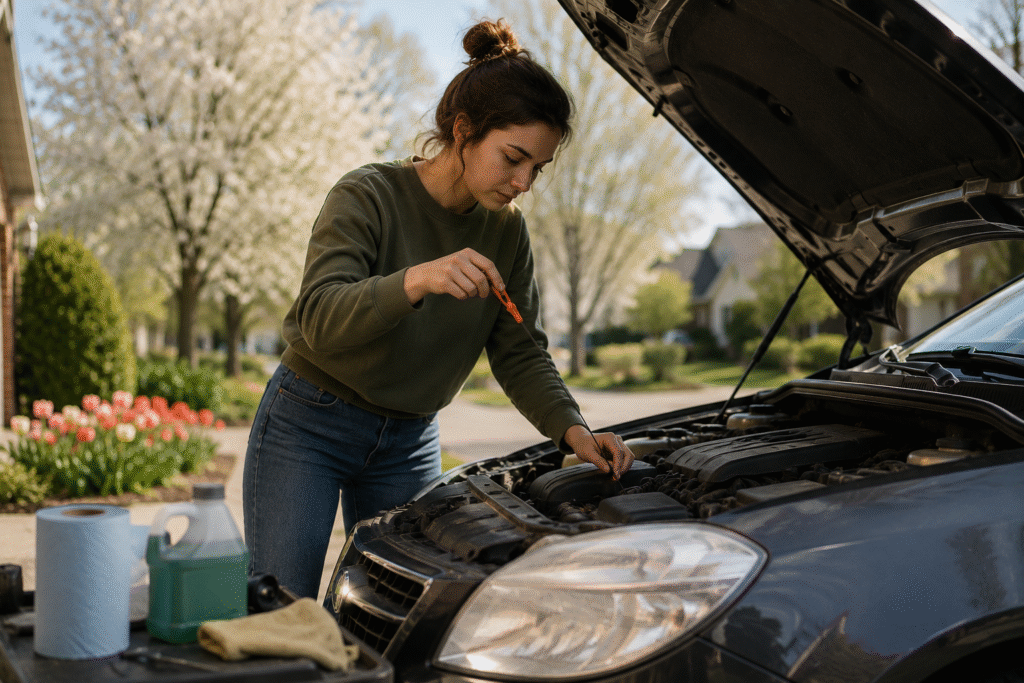
2. Get Your Oil Changed on Time
Oil is the lifeblood of your engine.
Without regular oil changes, your engine builds:
- Heat
- Friction
- Sludge
- Internal wear
Skipping oil changes is one of the fastest ways to shorten engine life.
New drivers should aim to:
- Check oil monthly
- Follow manufacturer intervals
- Never ignore oil warning lights
Routine spring car maintenance should always include an oil inspection.
Fresh oil keeps your engine:
- Cooler
- Cleaner
- More fuel efficient
- Longer lasting
3. Inspect Your Brakes After Winter
Michigan winters are brutal on brakes.
Salt, moisture, and heavy winter braking wear components down quickly.
Watch for:
- Squeaking
- Grinding
- Soft brake pedal
- Vehicle pulling while braking
- Vibration when stopping
Brake problems never fix themselves.
New drivers should get brake inspections every spring to avoid dangerous driving conditions.
4. Replace Wiper Blades and Check Washer Fluid
Winter destroys windshield wipers.
Salt, ice, and freezing temperatures crack the rubber quickly.
Poor visibility during spring rainstorms becomes dangerous fast.
New drivers should:
- Replace worn blades
- Refill washer fluid
- Clean the windshield regularly
Simple visibility maintenance prevents accidents.
5. Check Battery Health
Cold weather weakens batteries.
Many dead batteries happen in spring because winter already damaged them.
Signs of battery trouble include:
- Slow starts
- Clicking sounds
- Flickering lights
- Electrical issues
Most batteries last 3–5 years.
Spring is the perfect time to have battery voltage tested before summer heat arrives.
6. Watch for Pothole Damage
Michigan potholes are unavoidable.
Unfortunately, potholes damage:
- Alignments
- Tires
- Suspension
- Steering components
- Wheels
If your car:
- Pulls left or right
- Vibrates
- Feels unstable
- Has uneven tire wear
You likely need an alignment inspection.
Ignoring pothole damage leads to bigger repairs later.
7. Keep Fluids Topped Off
Spring maintenance includes checking:
- Coolant
- Brake fluid
- Transmission fluid
- Power steering fluid
- Washer fluid
Low fluids create unnecessary wear and overheating.
New drivers should learn how to identify basic fluid reservoirs under the hood.
Even simple checks can prevent major problems.
8. Wash Winter Salt Off Your Vehicle
Road salt is extremely corrosive.
It damages:
- Frames
- Brake lines
- Suspension
- Undercarriage components
- Paint
A thorough spring wash protects your vehicle long-term.
Focus heavily on the undercarriage where salt buildup hides.
9. Build Good Habits Early
The biggest difference between drivers who constantly deal with breakdowns and drivers whose vehicles last 200,000+ miles usually comes down to habits.
Good habits include:
- Routine inspections
- Listening to warning signs
- Regular maintenance
- Fixing small issues early
- Avoiding aggressive driving
New driver car tips are not about perfection.
They’re about consistency.
Final Thoughts
Spring maintenance isn’t complicated.
But ignoring small maintenance tasks eventually creates expensive repairs, dangerous driving conditions, and roadside breakdowns.
The smartest thing new drivers can do is learn basic vehicle care early.
A little attention now prevents:
- Engine damage
- Brake failures
- Tire blowouts
- Suspension wear
- Emergency towing bills
Simple spring car maintenance habits save thousands of dollars over time.
And more importantly — they keep you safer on the road.
Whether you’re driving across Michigan highways or just commuting locally, a properly maintained vehicle gives you confidence every time you turn the key.